Hip Flexor Tightness? Try This Stretch
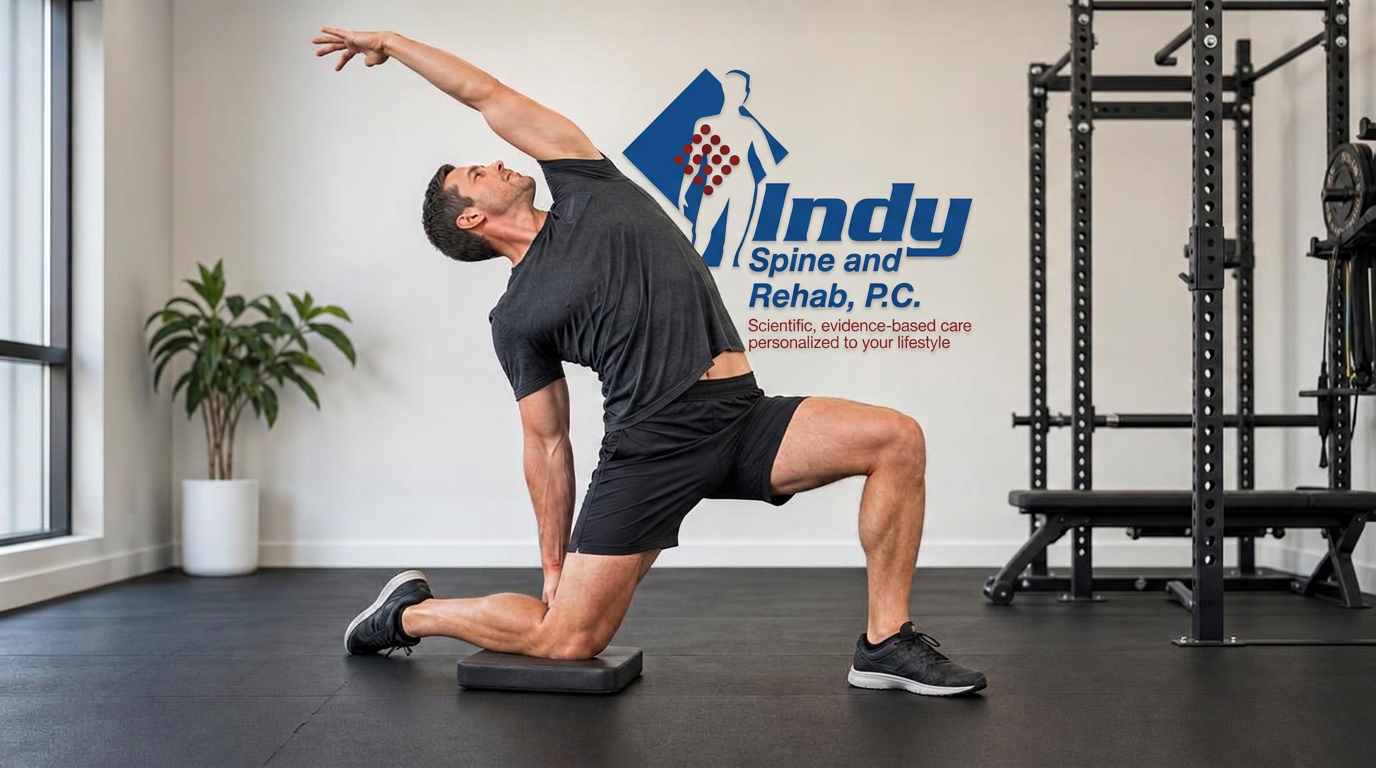
What the hip flexors actually are, how to test them with the Thomas Test, and the half-kneeling lunge stretch we use to release them.
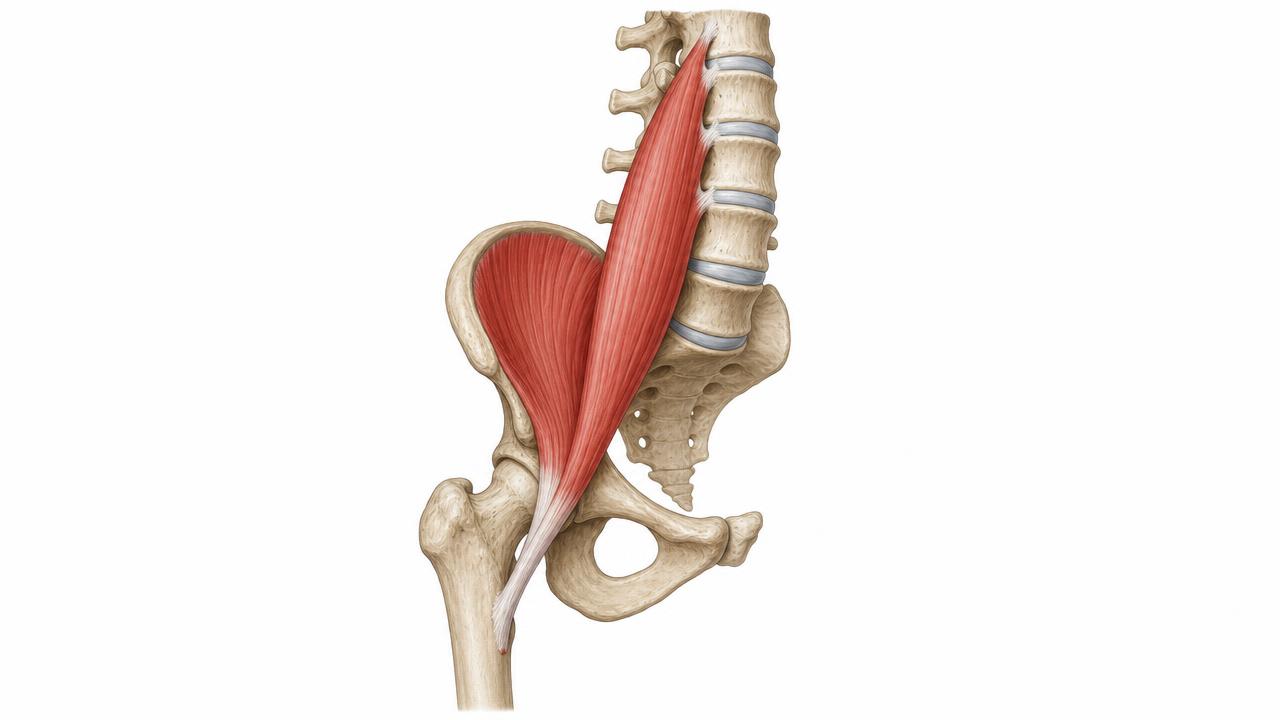
Your hip flexors are a group of muscles at the front of your hip that lift your thigh toward your chest. The main players are the iliopsoas (the psoas major, which runs from your lumbar spine to the top of your femur, and the iliacus, which lines the inside of your pelvis), along with the rectus femoris (the only quad that crosses both the hip and knee) and the tensor fasciae latae. Because the psoas attaches directly to your low back, a hip flexor that never gets to lengthen doesn't just affect your hip — it changes how your pelvis and lumbar spine sit and move.
Why hip flexors get tight
The most common cause is simple: time spent in a shortened position. Sitting holds the hip at roughly 90 degrees of flexion for hours at a time, and muscle tissue adapts to the position it lives in. Research on prolonged sitting shows reduced hip extension range and altered muscle activation patterns in people with desk-based jobs. Runners, cyclists, and lifters can be just as affected — repetitive flexion without full extension work produces the same result.
What people feel is usually one of these:
- A pinch or pull at the front of the hip or groin, especially standing up after sitting
- Low back tightness that returns no matter how much you stretch your back
- Glutes that feel "asleep" — tight hip flexors can reciprocally inhibit hip extensors
- A short, choppy stride when running, or trouble finishing a hip thrust or deadlift lockout
It's worth noting the evidence honestly: tightness is not always a true shortening of tissue. In many cases it's a protective stiffness — the nervous system limiting range because the area lacks strength or control. That's why stretching alone often gives short-lived relief, and why we pair stretching with strengthening.
Test it first: the Thomas Test
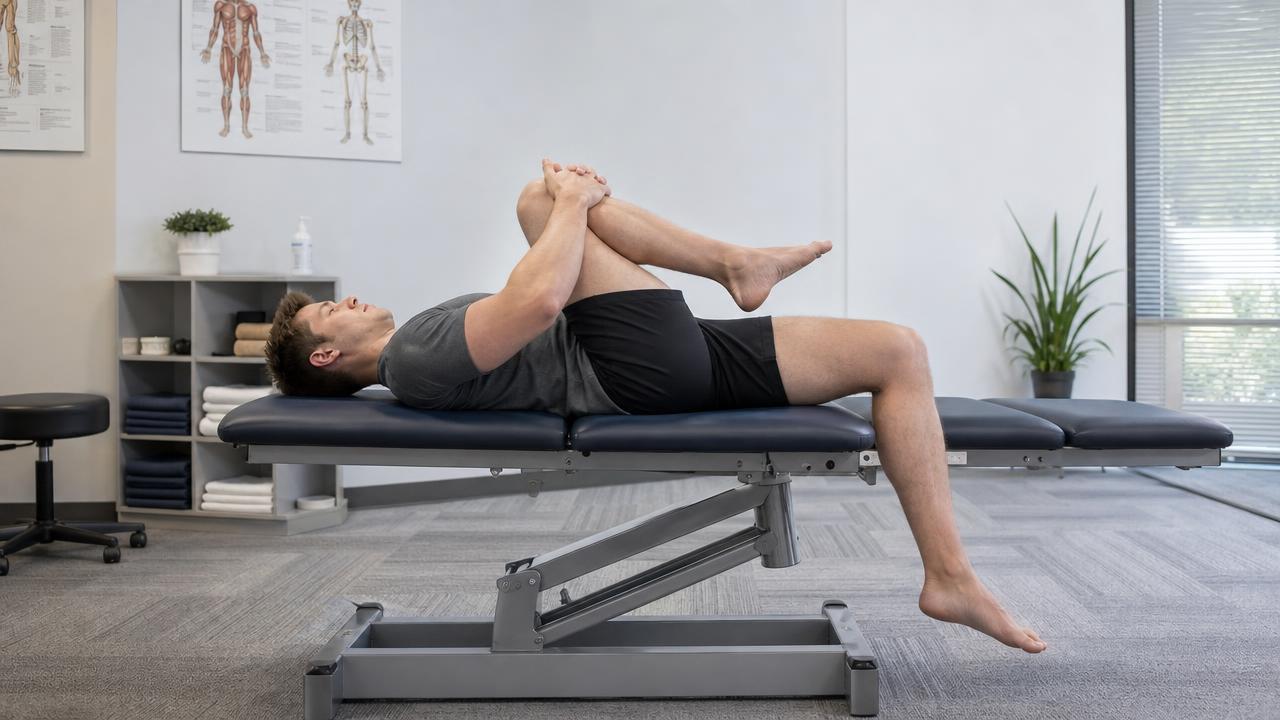
The Thomas Test is the standard clinical screen for hip flexor length, and it has reasonable reliability when performed carefully. You can do a version at home.
How to do it:
- Sit at the very edge of a firm table or sturdy bed — your tailbone should be right at the edge.
- Lie back while pulling both knees to your chest. This flattens your low back and locks the pelvis.
- Hold one knee to your chest and slowly lower the other leg toward the table.
- Let it hang and relax completely.
How to read it:
- Normal: The back of the lowered thigh rests on the table and the knee bends to about 80 degrees.
- Tight iliopsoas: The thigh floats above the table and won't drop flat.
- Tight rectus femoris: The thigh rests down, but the knee straightens out past 80 degrees.
- Tight TFL/IT band: The lowered leg drifts out to the side.
Test both sides. Asymmetry matters more than the absolute number — one hip that won't drop while the other does is a clear target.
The fix: the half-kneeling lunge stretch
This is the stretch we demonstrate on our Instagram — @indyspine — and it's the one we give most often, because it works when it's done correctly. Most people cheat it by arching the low back, which stretches the lumbar spine instead of the hip.
Setup and execution:
- Enter the lunge position: right knee down on a pad, left foot forward, both knees near 90 degrees.
- Tuck your hips under — squeeze the right glute and think "tailbone down, belt buckle up." This posterior pelvic tilt is the whole stretch. You should already feel the front of the right hip.
- Reach back with the right arm, keeping the hips tucked and the ribs from flaring.
- Reach on a diagonal away from the front leg — side-bend and rotate away from the left leg as you reach. That diagonal is what takes the psoas to its end range and gives the best stretch.
- Hold 30 seconds, breathing out slowly. Repeat 2–3 times per side. You should feel it across the front of the right hip and thigh — never in your low back.
Progression: For the rectus femoris, catch your back foot and pull the heel toward the glute while keeping the pelvis tucked. To make the gains stick, finish with the glute working — hold the tucked position and press the down knee into the floor for 5 seconds, 5 times.
Make it last
Static stretching produces reliable but temporary range gains; the studies that show lasting change pair stretching with loaded strengthening in the new range. Our standard homework looks like this:
- Half-kneeling stretch: 2–3 x 30 seconds per side, daily
- Glute bridges or hip thrusts: 2–3 sets of 10, driving to full hip extension
- Standing hip extension or split-squat work: to load the pattern you just unlocked
- Break up sitting: stand and take 5–10 steps every 30–45 minutes
Give it two to three weeks of consistent work, then re-run the Thomas Test.
When to get it looked at
Come see us if you have sharp groin pain, clicking or catching in the hip, pain that wakes you at night, numbness or tingling into the leg, or if the stretch changes nothing after a few weeks. A hip that won't loosen up is often a hip joint, SI joint, or lumbar disc issue wearing a hip flexor disguise — and those need a hands-on exam, not more stretching.
You do not need a serious injury to come in. We also treat plain old tight hip flexors — the kind that come from long workdays, hard training, or years of sitting — to loosen them up and get you back to feeling better.
At Indy Spine and Rehab we assess the hip, pelvis, and low back together, use soft tissue work (Active Release, Graston, dry needling) to change tissue tone, and then load it so the change holds.