Dry Needling
Shut down trigger points and reset the muscle.
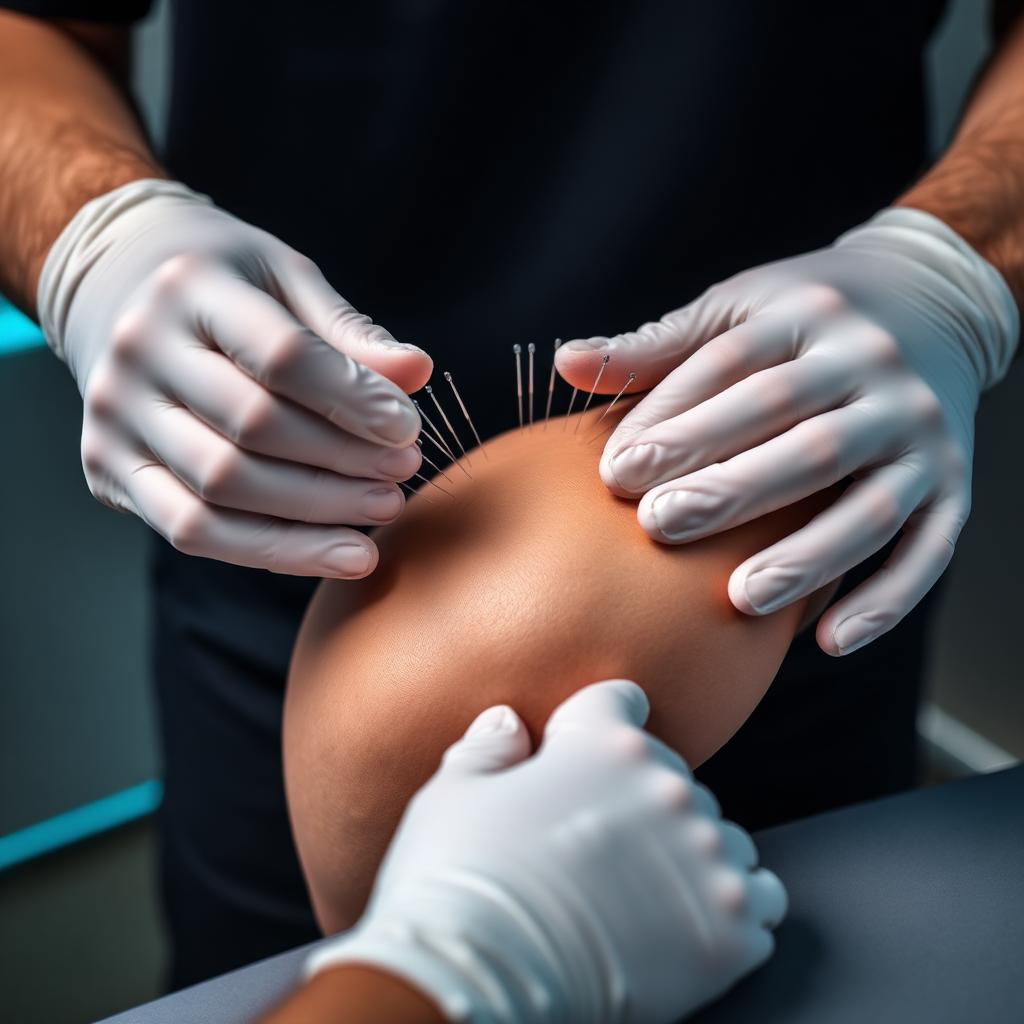
Dry needling uses very thin, solid filament needles — the same kind used in acupuncture — placed directly into tight, dysfunctional bands of muscle called trigger points. There's no medication; the needle itself is the tool. A small local twitch from the muscle is what tells us we've hit the spot, and that twitch is what resets the tissue.
Out of pain. Back to function.
Trigger points are micro-cramps that won't release with stretching, foam rolling, or massage. They restrict motion, refer pain elsewhere (which is why a knot in your glute can feel like sciatica), and cause muscles to fire late or weak. Dry needling shuts that cycle off — blood flow returns, the muscle lengthens, and pain drops within minutes. It's one of the fastest tools we have for stubborn muscle pain.
- A brief explanation and consent — most patients have never tried it
- Sterile, single-use needles inserted with minimal sensation
- A quick local twitch response in the target muscle (this is the goal)
- Mild soreness for 12–24 hours, then noticeably looser tissue
Is dry needling the same as acupuncture?+
The needle is the same; the goal isn't. Dry needling is Western, neuromuscular, and targets trigger points. Acupuncture is rooted in Traditional Chinese Medicine and works along meridians.
Does it hurt?+
Insertion is barely felt. The twitch response feels like a quick muscle cramp that releases in a second. Most patients are surprised by how mild it is.
Other Services
View all →
Chiropractic Adjustments
Precise spinal and extremity adjustments to restore mobility, reduce nerve irritation, and relieve pain at the source.

Active Release Technique (ART)
Certified hands-on soft tissue work that releases adhesions in muscle, fascia, tendon, and nerve.

Acupuncture
Traditional acupuncture used alongside chiropractic care to regulate pain, reduce stress, and support recovery.